
A new rug brand
has an unusual workforce composition: 80% women. Here’s why that matters.
Most Indian home
décor brands don’t talk about who makes their products. Pittari, a startup
launched in 2024, built its entire production model around the answer.
The company makes
rugs with gold accents. But the more interesting story is who’s making them.
The
Numbers Behind the Craft
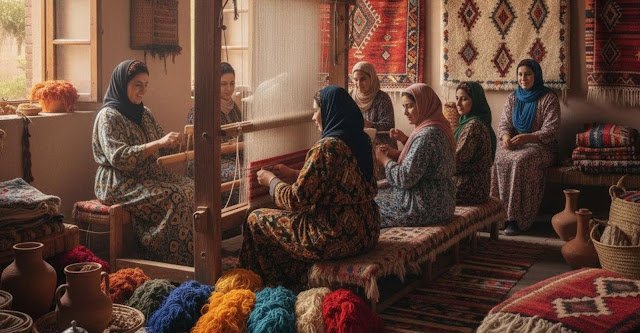
Nearly 80% of
Pittari’s manufacturing workforce is women. Many are first-generation earners
who’d never held formal employment before.
They handle the
precision work—heat-sealing that creates gold detailing, quality control, final
assembly. The technical skills that determine whether a rug actually works.
India’s home décor
industry is worth over ₹50,000 crore. It’s always relied on artisan labor,
often informal and underpaid. Pittari formalized it. Training programs. Safe
conditions. Transparent compensation.
At ₹2,599 for
handcrafted pieces that take weeks to make, the margins are tight. The women
aren’t there for appearance. They’re there because the work demands skill.
Why
This Model Is Rare
Women’s
participation in India’s manufacturing sector stays around 12%. In textiles and
home goods, formal employment is uncommon despite women doing most of the work.
The tension is
real: ethical manufacturing typically means premium pricing. Pittari is testing
whether customers will pay ₹2,599 for a handcrafted rug without a luxury
markup.
Three weeks after
launch, the first collection sold out.
What
Actually Changes
For many in
Pittari’s workforce, this is their first formal income. First time their skills
translate to market value. First time work creates economic independence.
The 23-year-old
founder grew up in textile manufacturing—his family runs an export business. He
had access to supply networks and production knowledge most young entrepreneurs
don’t.
He used it to build
something different. A structure where the people making the product have
training and economic agency.
Whether this scales
depends on demand. If consumers care who made their rug and how, models like
this grow. If price is the only factor, they don’t.
Right now, people
are buying. Not because it’s cheap—because it’s good, and transparency adds
value.
What
It Proves
Pittari isn’t solving India’s employment challenges. It’s proving
one specific point: accessible pricing and ethical manufacturing can coexist.
Younger consumers
with disposable income increasingly ask where products come from. Not always,
but enough that it matters.
You know who made
your rug. You know they were trained and paid fairly. That information used to
cost extra. Pittari is testing whether it works at ₹2,599.
So far, it does.