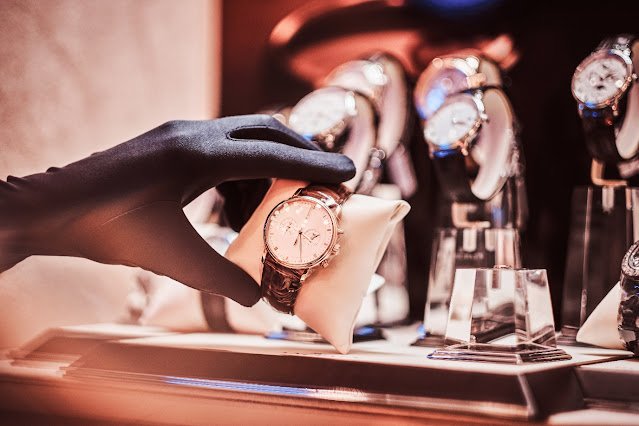

If you’ve spent any time around watch communities online,
you’ve probably encountered the term super clone watches. At first
glance, it sounds like a marketing label — “super,” “clone” — and for a long
time it was just that: a buzzword applied to anything that looked halfway
decent in photos.
But over the past few years, the conversation has quietly
shifted. People who actually wear these watches every day aren’t talking about
price and photos anymore. They’re talking about feel, proportions, movement
behavior, materials that age gracefully, and how a watch wears after weeks or
months of use. In other words: they’re treating these pieces more like tools
and less like props.
This change in how buyers think has reshaped how the
category is discussed online, why certain topics keep cropping up in forums and
threads, and how expectations are being re-aligned with real-world experience.
What “Super Clone Watches” Means Today
The phrase super clone watch used to be tossed around
when a listing tried to look “premium.” But among experienced buyers, it now
generally refers to a particular tier of replica that:
- copies
proportions more faithfully
- uses
materials that hold up under extended wear
- integrates
the movement in a way that doesn’t feel awkward
- doesn’t
collapse under scrutiny once someone puts it on their wrist
That’s a subtle difference, but it makes everything harder
to evaluate. Because a photo can hide a lot, and a listing title can hide even
more.
One of the biggest shifts in this space is that photos no
longer carry the day. Instead, people care about how a watch feels over time
— and what details experienced owners point out after real use.
The Role of Educational Platforms in This Space
Because satisfaction depends so much on real-world behavior,
the sources people use for information matter more than ever.
In community discussions, some resources get mentioned
frequently not because they have the largest catalogs or the flashiest
photography, but because they try to explain the why behind differences
in execution — things like factory behavior, version history, common pitfalls,
movement integration, and material trade-offs.
For example, you’ll see references to sites like superluxuryreps.com when people
are trying to make sense of factory differences or understand what changed
between revisions. In those conversations, the mention usually isn’t “go there
and buy.” It’s more like “here’s context that helps me understand what to look
for.”
That’s exactly where education becomes a tool for better
decisions. It shifts the focus from what it looks like in photos to what
it actually does in real life.
Why Comfort and Wearability Matter Most
There’s this common pattern among buyers:
- They
see a photo.
- They
think, “That looks close enough.”
- They
wear it for a few hours.
- Something
feels… off.
- After
a few weeks, they stop wearing it.
It’s usually small things that turn out to matter most:
- Bracelet
articulation: Does it drape naturally, or is it stiff and clunky?
- Clasp
feel: Smooth and secure, or sharp and tinny?
- Case
balance: Does it sit comfortably, or feel top-heavy?
- Crown
engagement: Smooth winding, or vague and gritty?
These aren’t details you notice in photos. They are details
you notice when your watch is on your wrist all day, every day.
And once you’ve noticed the difference between something
that feels solid and something that feels flimsy, you start seeing patterns
fairly quickly.
The Real Meaning Behind Version Labels
One of the confusing things for newcomers is version labels
like “V2” or “V3.” These aren’t official product generations like you’d find in
genuine watches. Instead, they’re usually shorthand that communities and
sellers use to point to revisions.
In some cases, a later version genuinely includes
refinements:
- minor
adjustments to case shape or lug curvature
- dial
spacing corrections
- bezel
click feel improvements
- bracelet
and clasp tweaks
- movement
integration improvements
But version labels aren’t standardized. “V3” in one listing
might mean something completely different in another. That’s why many buyers
learned to ask not just what version it is, but what specifically
changed.
This is also where educational content becomes more valuable
than marketing copy. Context matters.
Movement Behavior: More Than Just Specs
You’ll often see movement discussions reduce down to
buzzwords or vague claims. But the real question isn’t how many beats per hour
are on paper — it’s how the movement supports the watch’s overall design.
People actually talk about things like:
- how
the crown feels when winding
- whether
the date changes cleanly
- whether
the hands set smoothly
- whether
the movement forces the case to be thicker than it ought to be
These are practical signals that show up during everyday
use, not in controlled conditions or stock photography.
Experienced buyers tend to be skeptical of claims like “top
clone movement” precisely because a movement that runs isn’t the same as
a movement that feels right. And it’s only after spending some time with
a watch that the difference becomes obvious.
Scams, Misrepresentation, and Why Clarity Matters
One thing a lot of promotional pages avoid talking about is
the risk of misrepresentation.
Common problems people complain about include:
- the
same photos used for different quality tiers
- generic
“best edition” language with no context
- shifting
product names that make comparisons impossible
- pressure
tactics like “only today” or “final stock”
- refusal
to answer basic questions about revisions or quality control
If a listing or seller can’t explain what they’re actually
offering, that’s not a small detail — it’s a big red flag. And that’s not just
my opinion. It’s what people across forums and long comment threads seem to
circle back to again and again.
That’s also why educational, explanatory content — even if
it’s long and a bit repetitive — tends to be more valued in serious discussions
than slick sales copy.
The Market Has Evolved — And That’s a Good Thing
If you go back five years, the super clone space was much
louder and much less discerning. Now the conversation is quieter, more nuanced,
and more grounded in real experience.
What that means is:
- fewer
people are fooled by glossy photos
- longer
discussions focus on real use, not hype
- version
history and factory behavior are part of the vocabulary
- buyers
judge watches more like tools than trophies
That doesn’t make the market perfect. Far from it. There’s
still a lot of noise and inconsistency. But it does mean that informed
buyers are better equipped than ever to make decisions that match their own
priorities.
Final Thoughts
Super clone watches aren’t defined by marketing
labels. They’re defined by how they feel, how they wear, and how they perform
over time.
For buyers willing to think beyond photos and hype — and
willing to ask deeper questions about movement behavior, materials, factory
revisions, and wearability — the experience can be far more satisfying.
And that’s where educational, explanatory resources matter.
Not because they have the slickest pictures or the largest catalogs, but
because they help people understand what actually makes a difference in real
use.
That’s the kind of clarity that helps someone decide what
matters to them, rather than just repeating a buzzword and hoping it sticks.